
Vidora is drawing renewed attention from retailers, media companies and subscription businesses that want marketing systems to make faster。more useful decisions. The company’s platform applies machine learning to customer data, helping brands predict what an individual may want to see, buy or watch next. That idea is not new, but Vidora has built its reputation around making predictive personalization available beyond the largest technology departments. In practical terms, the system can examine browsing behavior, purchase history。content interactions and campaign responses before selecting a message or recommendation. For a consumer, the result may appear as a more relevant product shelf or a better-timed email. For a retailer, it can mean fewer wasted impressions and a clearer view of which customers are likely to return.The commercial pressure behind Vidora’s growth is easy to understand. Digital brands collect enormous volumes of information, yet many still divide customers into broad groups such as “new visitor” “loyal buyer” or “inactive subscriber” Those labels are useful, but they often flatten meaningful differences. Two customers who have not purchased in three months may require completely different treatment: one could be waiting for a price reduction, while the other has simply moved to a competing service. Vidora’s models are designed to detect those distinctions by evaluating behavior at a more granular level. Its technology can support recommendations。churn prevention, cross-selling and campaign optimization, allowing marketing teams to shift from fixed rules toward predictions that change as new signals arrive.That shift has become especially relevant in entertainment and streaming, where audiences face an endless supply of content. A platform may have thousands of films, episodes or live events available, yet a viewer can still leave after a few minutes if the opening recommendations feel generic. Vidora’s approach gives operators a way to rank content according to an individual’s likely interest rather than relying only on popularity charts. The same logic applies to online retail. A shopper who repeatedly examines outdoor equipment may respond to a technical buying guide。while another visitor looking at the same category may be more interested in a discount. Vidora does not remove the need for editorial judgment or creative work, but it can provide a sharper signal about when and where those efforts are most likely to succeed.Privacy and data governance remain the harder part of the story. Predictive systems are only as dependable as the information supplied to them, and customers are increasingly sensitive to how their activity is collected and used. Vidora therefore operates in a market where technical performance must be matched by clear consent practices, secure data handling and explainable business rules. A campaign that produces a higher conversion rate but appears intrusive can damage trust quickly. In conversations with marketers。the most persuasive case for Vidora is not that it can predict every customer perfectly;it is that the platform can help teams test decisions, measure outcomes and improve without relying entirely on instinct. That distinction matters when budgets are tight and public tolerance for opaque tracking is shrinking.
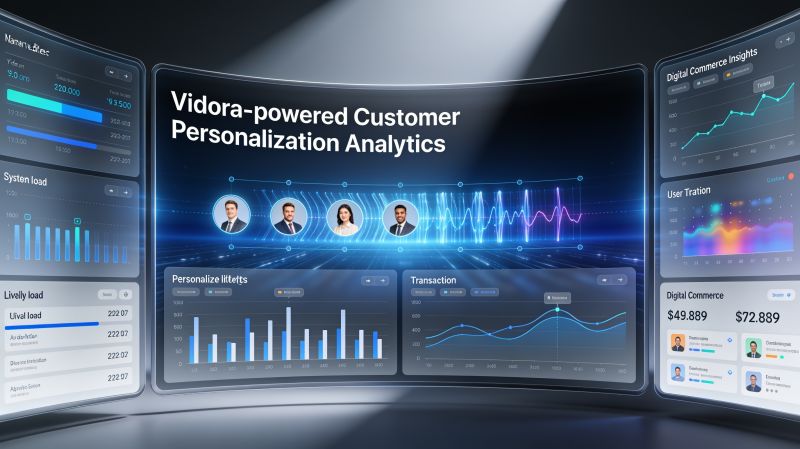
Vidora’s future will depend on whether it can turn sophisticated modeling into routine business infrastructure. Marketing leaders do not want another isolated dashboard that requires a specialist to interpret every result. They want predictions connected to the systems already used for commerce。customer service and content delivery. Vidora is positioned around that practical demand, offering tools intended to bring machine learning closer to everyday campaign decisions. The company still faces familiar challenges, including crowded competition, changing privacy rules and the difficulty of proving long-term value. Even so, its central proposition remains compelling: better use of customer signals can make digital experiences feel less random. If Vidora can maintain accuracy while keeping control in the hands of marketers and consumers, it may become less a visible brand and more an embedded layer behind the next generation of personalized services.