
Huang Jianxiang has reignited debate over the South Korean national team after discussing the dressing-room dispute that overshadowed the country’s Asian Cup campaign. The Chinese commentator linked the team’s disappointing performance to a confrontation involving captain Son Heung-min and midfielder Lee Kang-in。arguing that the incident exposed more than a brief personal disagreement. In Huang’s view, the clash reflected unresolved tensions over authority, responsibility and the changing hierarchy inside a squad that has spent years balancing veteran leadership with emerging talent. Huang Jianxiang discusses internal strife within the South Korean team not as isolated gossip, but as a problem that can affect decisions on the pitch.
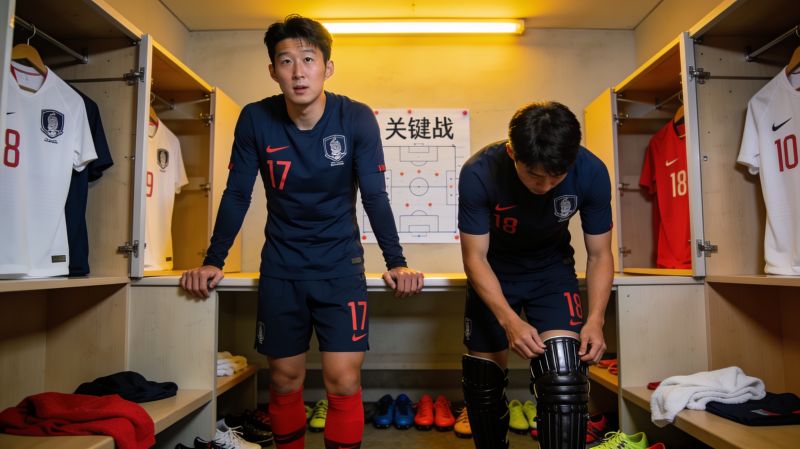
The dispute reportedly occurred before South Korea’s semifinal defeat by Jordan in the 2023 AFC Asian Cup. Local reports said several younger players, including Lee, wanted to leave the team meal early to play table tennis. Son objected。and the argument escalated. The captain later suffered a dislocated finger during the confrontation. The Football Association confirmed that a physical altercation had taken place, while Lee issued an apology and Son publicly urged supporters to forgive the younger player. Those details gave the controversy unusual weight. A disagreement over a meal schedule became a symbol of a team struggling to define who could speak, who had to listen and how much influence senior stars should retain.Huang Jianxiang discusses internal strife within the South Korean team with a tone that is sharper than the cautious language normally used by official federations. He suggested that the episode could not be separated from South Korea’s tactical shortcomings. Against Jordan, South Korea looked hesitant。disconnected and unable to impose control in midfield. The team had previously survived late drama and defensive lapses, but the semifinal exposed a lack of collective clarity. Players appeared to be reacting individually rather than moving as a coordinated unit. That does not prove the dressing-room fight caused the defeat, yet it is reasonable to ask whether a strained relationship between influential players weakened concentration at a crucial moment. Football rarely offers a single explanation for failure, but internal trust is one of the first casualties when a squad stops operating as one group.The reaction also revealed a generational fault line. Son represents discipline, international experience and the expectations attached to the captain’s armband. Lee, younger and more expressive, symbolizes a new generation of Korean talent accustomed to taking initiative at major European clubs. Neither profile is inherently wrong. The trouble begins when confidence is interpreted as disrespect。or when seniority is treated as a permanent right to command. Huang’s comments have resonated because many supporters recognize that tension. A national team is assembled for short tournaments, leaving little time to repair damaged relationships. Club football allows players to work through conflict over a season;
an international side may have only a few training sessions before a knockout match. The margin for emotional mistakes is painfully small.South Korea’s response will be measured not by public apologies alone but by what happens when the same players meet again. Son and Lee have already attempted to close the dispute, and the coaching staff will need to establish clear standards rather than rely on personal authority. Huang Jianxiang discusses internal strife within the South Korean team as a warning about leadership, not merely a sensational story about two famous players. The issue is whether the federation can create an environment where disagreements are handled before they become physical。public and impossible to contain. South Korea still possesses enough talent to challenge for major honors, but talent cannot compensate for a divided dressing room. The next squad selection, training camp and competitive match will show whether the controversy has produced genuine reform or simply a temporary pause in a deeper conflict.