Japanese Rising Sun Flags Frequently Appear in World Cup Stands。turning ordinary matchday scenes into a flashpoint over history and national identity. During Japan’s World Cup matches, supporters have often displayed the country’s familiar blue-and-white flag, while a smaller number have carried the Rising Sun design associated with Japan’s wartime navy. The image can pass unnoticed among thousands of scarves and banners, yet it rarely remains politically neutral for viewers from South Korea, China and other parts of East Asia. Japanese Rising Sun Flags Frequently Appear in World Cup Stands partly because the symbol remains visible in sports culture, military ceremonies and commercial branding inside Japan. For many Japanese fans, it represents energy, victory or a traditional sun motif rather than imperial aggression. For critics abroad, the design recalls Japan’s colonial rule and military expansion before and during the Second World War.
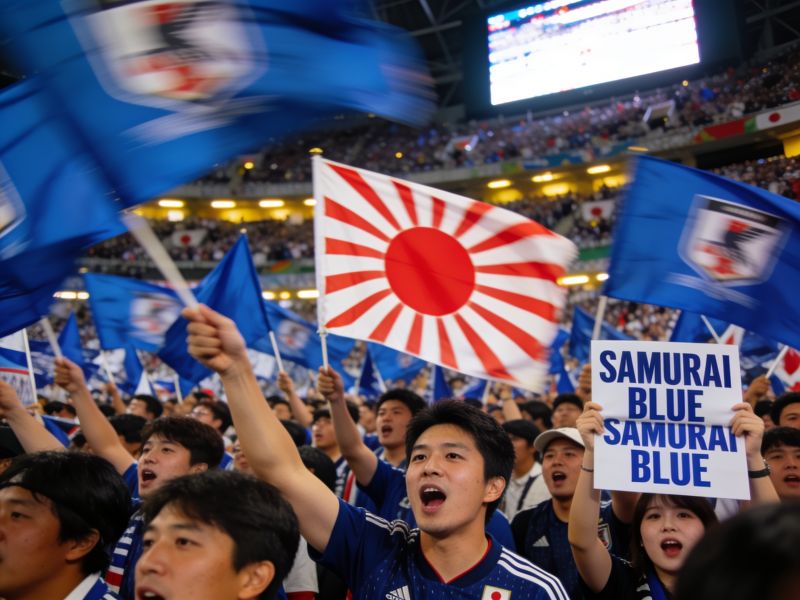
Japanese Rising Sun Flags Frequently Appear in World Cup Stands in ways that are difficult to separate from the atmosphere of international football. A fan may wave the flag beside a national banner, paint its rays on a cheek or print it on a homemade sign without making an explicit political statement. Television cameras usually focus on the larger crowd。but close-up photographs can give one symbol global reach within minutes. Japanese Rising Sun Flags Frequently Appear in World Cup Stands at matches where excitement is high and stadium security is primarily concerned with violence, flares and prohibited commercial material. That does not mean every appearance is officially endorsed. FIFA rules generally restrict discriminatory, racist or inflammatory displays, while enforcement depends on the design, context and complaint made at the venue.Japanese Rising Sun Flags Frequently Appear in World Cup Stands because the symbol occupies an unusually complicated place in Japanese public life. The Japan Maritime Self-Defense Force still uses a modified version of the rising-sun pattern, and the design appears at festivals, fishing ports and sporting events. Government officials and supporters often describe it as a longstanding cultural emblem. The objection from South Korean and Chinese observers is equally specific: the rays are connected to Japan’s military occupation, forced labor, violence and wartime rule. Japanese Rising Sun Flags Frequently Appear in World Cup Stands。therefore, not simply as decorative items but as objects carrying different memories depending on who is looking at them. A Japanese supporter may see a bright, triumphant sun;a Korean spectator may see the flag of an occupying power.Japanese Rising Sun Flags Frequently Appear in World Cup Stands also reflect the uneven way global tournaments handle historical symbols. Organizers can quickly remove a banner containing an insult directed at a player, yet a national emblem with disputed meaning may fall into a grey area. On social media, one photograph is often enough to produce demands for an apology, calls for a ban and counterclaims that the criticism is an attack on Japanese culture. Japanese Rising Sun Flags Frequently Appear in World Cup Stands has become a recurring online headline precisely because the phrase compresses a complex dispute into a visual accusation. Some fans argue that banning the symbol would politicize the stadium. Others respond that allowing it without explanation ignores the experience of people whose families lived under Japanese occupation. Neither position is likely to disappear during a ninety-minute match.
Japanese Rising Sun Flags Frequently Appear in World Cup Stands, but their presence should not be mistaken for a single, coordinated campaign by Japanese supporters. Most traveling fans arrive with blue national flags, drums and team shirts, and many have little interest in historical confrontation. Japanese Rising Sun Flags Frequently Appear in World Cup Stands when individual choices meet the enormous visibility of a World Cup crowd. Japanese Rising Sun Flags Frequently Appear in World Cup Stands。and each appearance can reopen an argument that sports organizers have never fully resolved: whether a symbol should be judged by present-day intent, historical use or the harm it causes to those watching. The most practical response is clearer stadium guidance, consistent enforcement and better public awareness before the tournament begins. Without that preparation, a small flag in the stands can overshadow the football, dominate regional headlines and turn a moment of celebration into another chapter in East Asia’s unfinished memory.