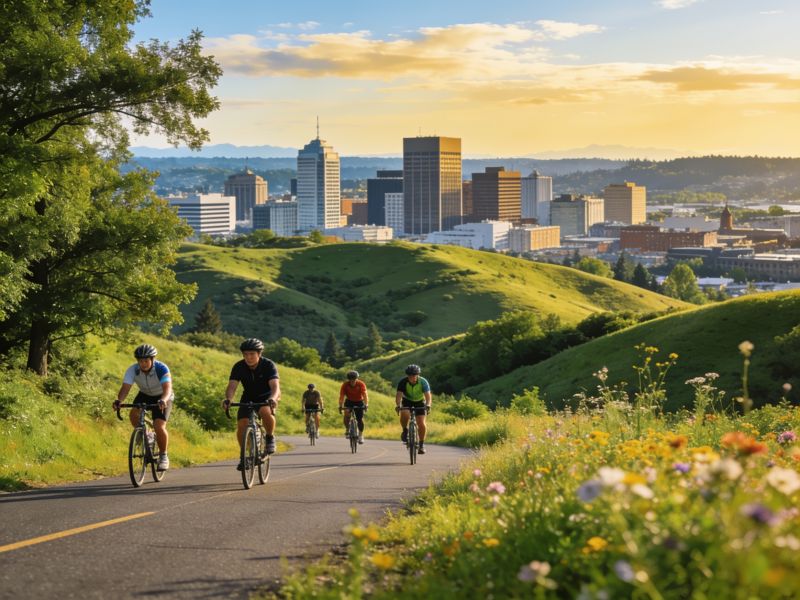
Eugene is facing a familiar urban dilemma: how to grow without giving up the character that has made the Oregon city attractive to students, families。athletes and outdoor-minded newcomers. New apartment buildings are rising around downtown and near the University of Oregon, while longtime residents are watching rents, home prices and traffic move steadily upward. City officials describe the expansion as necessary, but some neighborhood groups say the pace is changing Eugene faster than local services can handle. The argument is no longer about whether Eugene should grow. It is about who can afford to remain in the city once growth arrives.At the center of the dispute is housing. Eugene has added thousands of residents over the past decade, yet the supply of homes has struggled to keep pace with demand. A walk through the Whiteaker neighborhood shows the tension in plain view: older cottages sit beside renovated houses, compact developments and vacant lots awaiting construction. Local renters often speak of sharp increases at lease renewal, while property owners point to higher insurance, maintenance and utility costs. Housing advocates argue that Eugene needs more apartments near transit and employment centers。not just larger homes on the edge of town. That approach could reduce sprawl, though it also brings worries about parking, construction noise and the loss of familiar streetscapes.Transportation has become another daily test for Eugene. The city has a strong cycling culture, and its extensive bike network remains one of Eugene's most visible civic achievements. On a weekday morning, commuters pedal along river paths and protected lanes as buses move toward the university and downtown. Yet the system is not equally convenient in every part of the city. Residents in outer neighborhoods often depend on cars, and several major roads become congested during school hours or university events. The challenge for Eugene is to connect clean transportation ideals with the practical routines of people who need to carry children, tools or groceries. A bike lane may look simple on a planning map;on a rainy evening。its value depends on lighting, maintenance and whether it connects to anything useful.
Sport gives Eugene an international profile that few cities of its size can match. Hayward Field, rebuilt on the University of Oregon campus, continues to draw elite runners, coaches and spectators from around the world. Track meets bring hotel bookings。restaurant traffic and a burst of energy to local businesses, but they also expose a divide between Eugene's global reputation and the quieter concerns of residents living nearby. During major events, streets fill with visitors and temporary signs, while local workers manage longer shifts and higher demand. The city has learned to market itself as “TrackTown, USA” yet Eugene is more than a stadium and a finish line. Its cultural identity also comes from independent bookstores, small music venues, neighborhood markets and the riverfront paths used by people who may never attend a championship meet.
Environmental pressure is making the city's choices more urgent. Eugene's location between forested hills and the Willamette River offers scenic advantages, but it also leaves the community exposed to wildfire smoke, extreme heat and flooding concerns. Residents remember recent summers when smoke turned the afternoon sky orange and outdoor activities became difficult. Public officials have expanded conversations about cooling centers, emergency alerts and tree cover, while environmental groups are pressing for stronger protections around waterways and mature forests. The most convincing work is often quiet: a shaded sidewalk, a restored wetland, a reliable bus route or a home insulated against heat. Eugene's future will be measured less by slogans than by whether these projects reach renters, older residents and lower-income neighborhoods. For now, the city remains appealing precisely because it has not become a finished product. Eugene is still negotiating its identity in public。block by block, with the outcome likely to shape Oregon's broader debate over livability and growth.